
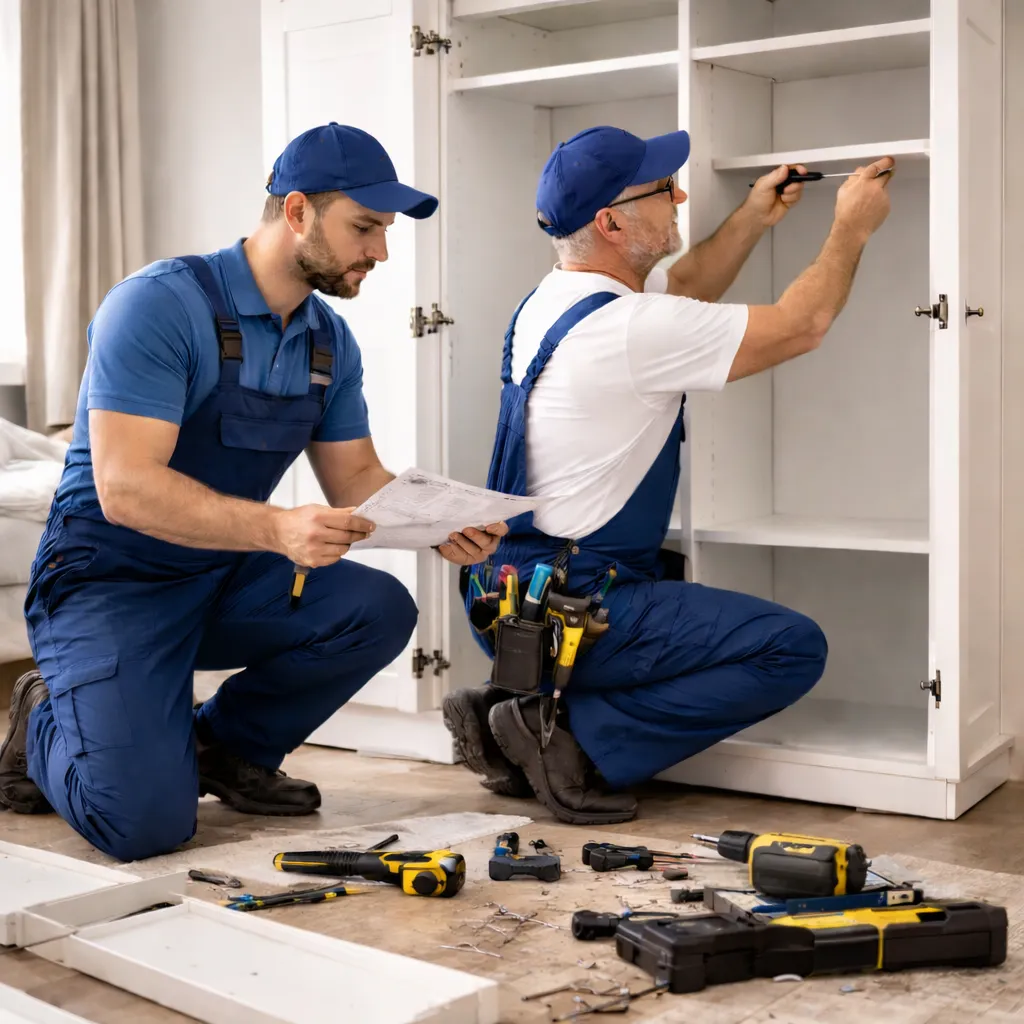

Assembly details that affect the result
Furniture can look simple in the box but still end up misaligned, loose, or unstable if the small details are rushed. The assembly process should leave room for adjustment first, then tighten the hardware after panels, frames, doors, drawers, or legs line up correctly. That helps the finished piece sit better in the room and reduces avoidable fit problems.
- Power tools or power screwdrivers can overtighten fasteners and damage hardware or furniture parts, so tool pressure needs control.
- Similar-looking screws should not replace supplied hardware when the instructions call for a specific fastener.
- Screws and bolts should stay loose until the parts are aligned and seated.
- Leveling should happen before final tightening, especially on uneven floors.
- Anti-tip attachment needs the right support behind the wall surface, whether the wall is drywall with a stud, drywall without a stud, or masonry.

